Ditapis dengan
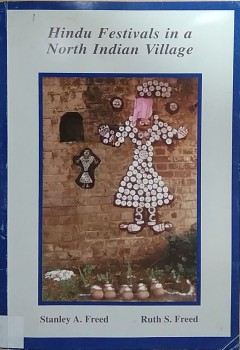
Hindu Festivals in a North Indian Village
This Monographis the tenth of a series devoted to the description and analysis of life in shanti nagar, a village in the Union Territory of Delhi. Our research is based on holistic fieldwork carried out in 1957-59 and 1977-78. Previous monograph, all published in the Anthropological Papers of the American Museum of Natural History., have dealt with social organization, economic and technology, …
- Edisi
- -
- ISBN/ISSN
- 0-295-97707-8 / 0065
- Deskripsi Fisik
- W= 17,2cm, H= 25,5cm, P= 336
- Judul Seri
- -
- No. Panggil
- 720 Ca 4
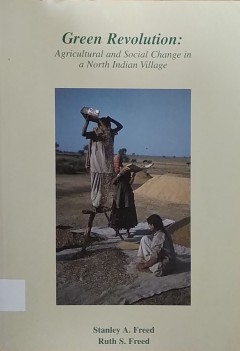
Green Revolution: Agricultural and Social Change in a North Indian Village
In the mid-1960s, rural india passed through a period of rapid technological and social change known as the green revolution. It was the transition from basically subsistence peasant farming at a low technological level to expendsive commercial farming with modern technology. five major sociotechnological innovations were basic to the green revolution: the development of high-yielding varieties…
- Edisi
- -
- ISBN/ISSN
- 0065-9452
- Deskripsi Fisik
- W= 17,8cm, H= 25,5cm, P= 312
- Judul Seri
- -
- No. Panggil
- 720 Ca 5
 Karya Umum
  Filsafat
  Agama
Agama  Ilmu-ilmu Sosial
  Bahasa
  Ilmu-ilmu Murni
  Ilmu-ilmu Terapan
  Kesenian, Hiburan, dan Olahraga
  Kesusastraan
  Geografi dan Sejarah